Source Polished Miniature Linear Guide Slider for CNC and 3D Printers
Find and compare polished miniature linear guide slider options from 30 verified listings. Evaluate specifications like stroke range, load capacity, and accuracy to select the right components for precision automation and industrial machinery applications; compare the available evidence and request quotations based on your requirements.
Key considerations
Products List


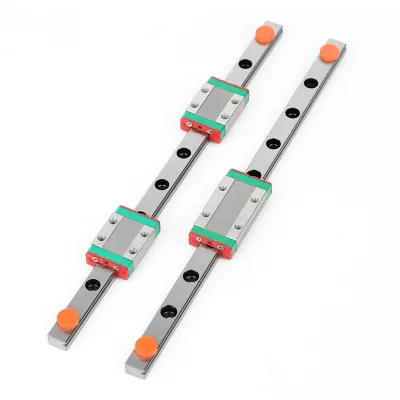


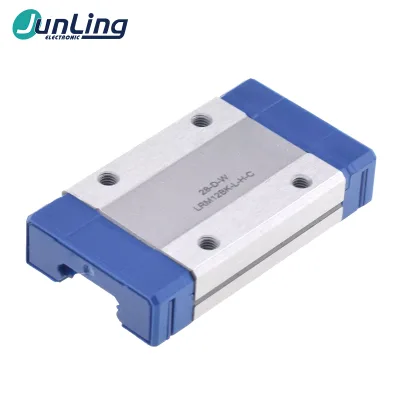

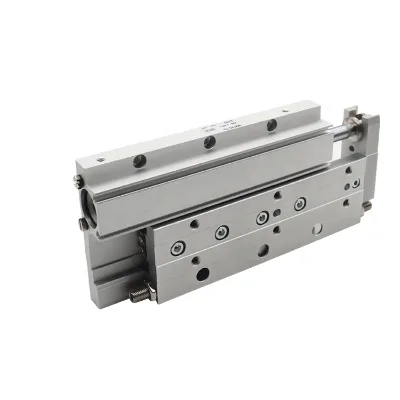
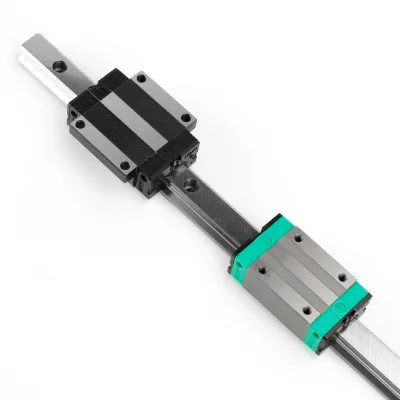


Comprehensive Sourcing Guide
Polished Miniature Linear Guide Slider Sourcing Guide
Buyers must first distinguish between general crane applications and precision motion components when searching for polished miniature linear guide sliders. While the market lists products for workshop, warehouse, and shipboard cranes, the specific item of interest here is the MGN series rail slide designed for high-precision machinery. Procurement teams should verify that the supplier distinguishes these miniature components from heavy-duty lifting equipment to ensure the selected part matches the intended load and speed requirements of the specific automation system.
The observed product listings indicate a wide range of stroke lengths and load capacities, from light-level carrying capacities up to specific horizontal and vertical load limits. Sourcing strategies should focus on verifying the exact model number, such as MGN9 or MGN12, against the required stroke range of 50 to 400mm. It is critical to confirm that the polished slider block is compatible with the specific rail width, such as the 30mm standard, to prevent mechanical interference in tight assembly spaces.
Product Scope and Observed Listing Signals
Procurement teams should analyze the observed price range of 0.1 to 538 USD to understand the variance in product quality and customization levels. This broad spectrum suggests that lower-cost items may be standard off-the-shelf components, while higher-priced units likely include specialized polishing, custom packaging, or integrated stepper drivers. Buyers must scrutinize the product description to ensure the listed price corresponds to the specific configuration, such as the inclusion of a 2-phase 35 stepper driver or specific color options like red and green sliders.
The availability of customization and various packing options, including industrial, factory, and white box packaging, offers flexibility for different supply chain needs. However, buyers should verify if the "Rich" stock status applies to the specific polished finish required, as some listings may only offer standard finishes. It is essential to confirm whether the supplier can provide the exact model numbers like MGN5 or MGN15 with the requested polished surface treatment to avoid delays in production schedules.
Technical Specifications to Verify
Technical due diligence requires confirming the repeatability accuracy of 0.05mm, which is a critical metric for high-precision applications like 3D printers and cutting machines. Buyers must ensure that the polished slider maintains this accuracy under the specified maximum speed of 200mm/s without introducing vibration or backlash. The verification process should include checking the lead screw model, such as Tr8, to ensure it pairs correctly with the linear rail for the desired motion profile and load distribution.
The driven type, whether AC, DC, or step motor, must align with the existing control architecture of the end-user machinery. Sourcing teams should validate that the product supports the required running mode, specifically the moving mode, and that the structure, described as rail and slider or linear guide rail and block, fits the installation constraints. Additionally, verifying the standard driver compatibility, such as the 2-phase 35 stepper driver, ensures seamless integration without requiring expensive aftermarket modifications.
Compliance and Safety Documentation
Compliance verification is paramount when sourcing components that may be used in diverse environments, including shipboard or goods yard applications. Buyers must request documentation confirming ISO 9001 and CE certifications, as these are explicitly listed in the product facts and indicate adherence to international quality management and safety standards. It is crucial to ensure that the specific batch of polished sliders carries valid certification marks, as generic claims may not apply to every unit in a large order.
Safety documentation should also address the RoHS compliance, which restricts hazardous substances in the manufacturing process. Procurement teams must verify that the insulating and antiseptic features, if required for the application, are backed by test results or material safety data sheets. Ensuring that the product origin, such as Ningbo, China, is clearly stated on the compliance certificates helps in tracing the supply chain and managing any potential regulatory risks associated with the import of mechanical components.
Cost Drivers and Commercial Terms
The minimum order quantity (MOQ) range of 1 to 500 units significantly impacts the total cost of ownership and inventory strategy. Buyers should negotiate terms that align with their production volume, as lower MOQs may incur higher per-unit costs, while larger orders might benefit from economies of scale but require more capital upfront. Understanding the relationship between the MOQ and the specific model, such as MGN9 800mm, helps in optimizing the purchase order to balance cost efficiency with storage constraints.
Commercial terms must also account for the customization availability and the specific packing requirements, such as wooden cases or cartons. The cost of specialized packaging, like wooden packing for heavy or delicate shipments, should be clearly defined in the commercial agreement to avoid unexpected expenses. Buyers should clarify whether the price includes the cost of the standard driver or if it is a separate line item, ensuring that the total landed cost reflects all necessary components for immediate installation.
Supplier Qualification and Quality Control
Supplier qualification should prioritize vendors who explicitly offer ODM and OEM services, indicating a capacity to adapt products to specific buyer requirements. Buyers must assess the supplier's ability to maintain the polished finish and structural integrity of the rail and slider assembly during the manufacturing process. It is advisable to request samples of the MGN series to verify the physical quality of the polish and the smoothness of the movement before committing to a larger production run.
Quality control protocols should include a verification of the product origin and the consistency of the certification marks across the entire order. Buyers should implement a receiving inspection process that checks the stroke range, load capacity, and repeatability accuracy against the specified standards. Ensuring that the supplier can consistently deliver products with the correct model numbers, such as MGN7 or MGN12, is essential for maintaining the reliability of the final automated systems.
Long-Term Procurement Checks
Long-term procurement strategies should focus on the availability of spare parts and the consistency of the product specifications over time. Buyers must verify that the supplier can maintain the supply of specific models like MGN5 or MGN15 with the same polished finish and technical characteristics for the lifespan of the machinery. This continuity is vital for maintenance and repair operations, ensuring that replacement parts fit perfectly without requiring design changes to the existing equipment.
Regular performance reviews should be conducted to monitor the durability of the insulating and antiseptic features under actual operating conditions. Procurement teams should establish a feedback loop with the supplier to address any issues related to the driven type or installation compatibility, such as the all-terrain or cutting machine applications. By maintaining a proactive relationship, buyers can ensure that the polished miniature linear guide sliders continue to meet the evolving demands of their production lines.
FAQs
What are the available specifications for polished miniature linear guide sliders?
Polished miniature linear guide sliders are available in models such as MGN5, MGN7, MGN9, MGN12, and MGN15. The standard width is 30mm, with guide lengths ranging from 100mm to 4000mm. Stroke ranges typically span 50mm to 400mm, allowing for versatile integration into compact mechanical systems and precision equipment applications.
Can these sliders be customized for specific industrial applications?
Yes, customization is available for polished miniature linear guide sliders. Manufacturers offer ODM and OEM services to tailor products to unique requirements. Options include specific colors like black, red, or green sliders, and various packing methods such as industrial, factory, or white box packaging to meet distinct logistical needs.
What certifications do these linear guide products hold?
These products typically hold ISO 9001 and CE certifications, ensuring compliance with international quality and safety standards. Some listings also indicate RoHS certification, confirming adherence to environmental regulations. These credentials verify the manufacturing quality and material safety, making them suitable for regulated industries and global supply chains.
What is the carrying capacity and load range for these sliders?
The carrying capacity is generally classified as light level. Horizontal load ranges from 0 to 5kgs, while vertical load ranges from 0 to 2kgs. This makes them ideal for lightweight applications such as 3D printers, cutting machines, and other precision devices requiring smooth, low-friction linear motion.
Where are these miniature linear guides manufactured and shipped from?
These products are primarily manufactured in China, with Ningbo being a key origin location. They are stocked in rich quantities and shipped using cartons, wooden cases, or industrial packing. This ensures reliable availability and efficient logistics for international buyers seeking quick delivery and consistent supply chain support.
What is the repeatability accuracy of these linear guide sliders?
The repeatability accuracy is specified at 0.05mm, ensuring high precision in linear motion applications. This level of accuracy is critical for tasks requiring consistent positioning, such as in CNC parts, automated assembly, and scientific instruments. The design supports stable performance across various driven types, including stepper motors and AC drives.